Wine Packs
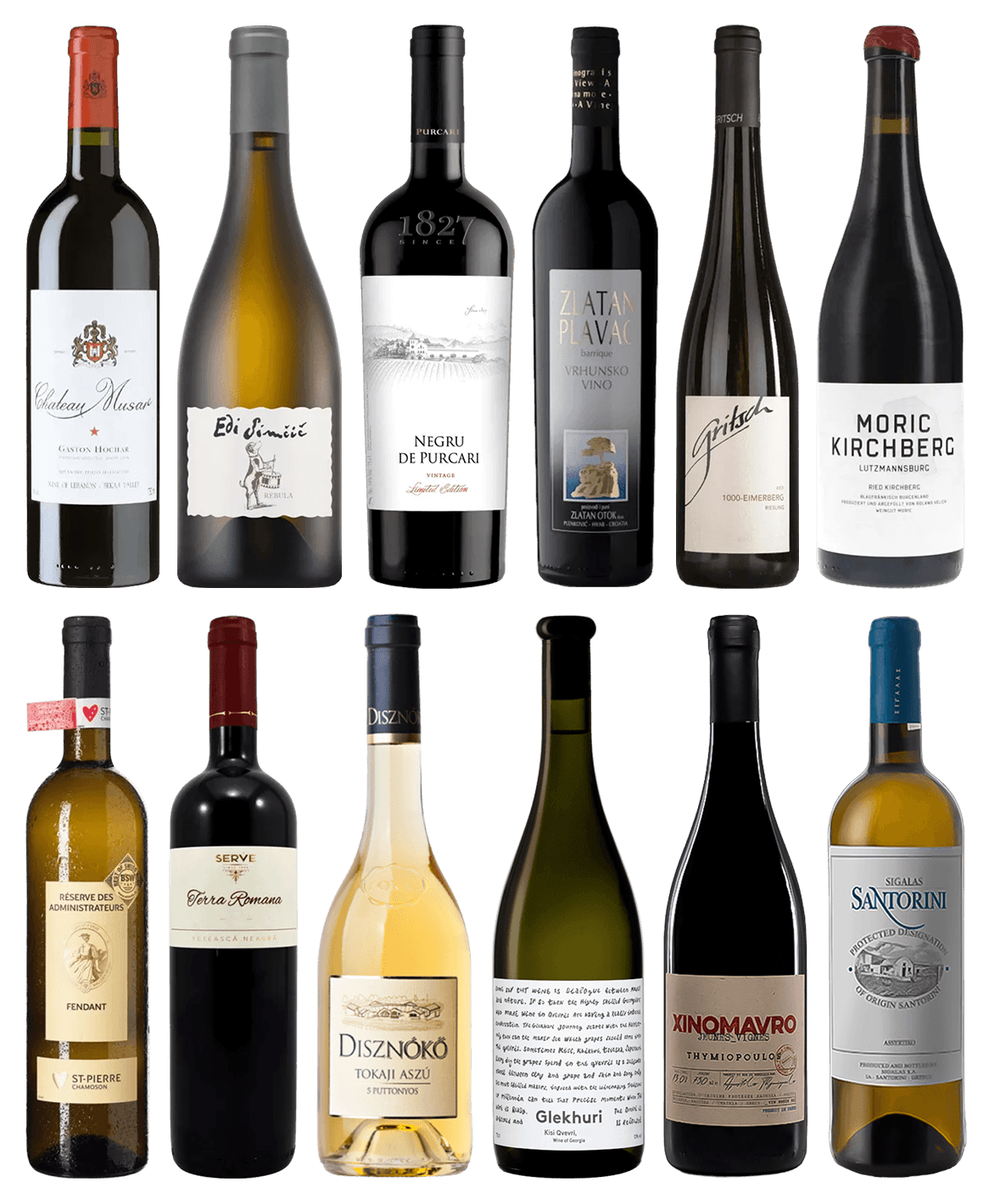
WSET "Rest of the World" 12 bottles Pack
WSET "Rest of the World" 12 bottles Pack
Couldn't load pickup availability
1. Greece – Santorini – Assyrtiko
Sigalas Assyrtiko 2024
Chosen to represent one of the Mediterranean’s most distinctive white wine styles. High acidity, saline minerality and citrus character make it ideal for studying volcanic soils, extreme maritime conditions and indigenous Greek varieties in WSET.
2. Greece – Naoussa – Xinomavro
Thymiopoulos Xinomavro Jeunes Vignes 2023
Selected to showcase Greece’s flagship structured red grape. High acidity, firm tannins and red fruit with savoury notes make it excellent for studying age-worthy reds and comparisons with Nebbiolo in WSET.
3. Austria – Wachau – Riesling
Gritsch Ried 1000-Eimerberg Riesling Wachau
Chosen to represent premium Austrian Riesling. High acidity, stone fruit and mineral precision make it essential for studying continental climate whites, steep vineyard sites and the distinctive dry style of Austrian Riesling.
4. Austria – Burgenland – Blaufränkisch
Moric Lutzmannsburg Ried Kirchberg Blaufränkisch Trocken
Selected to illustrate Austria’s leading red grape. Fresh acidity, dark fruit, spice and firm structure make it ideal for studying cool-climate red wines, regional typicity and Blaufränkisch’s age-worthy style.
5. Hungary – Tokaj – Furmint / Sweet Wine
Tokaj Aszú 5 Puttonyos 2014 – Domaine Disznókő
Chosen to represent one of the world’s great sweet wines. High acidity balanced by botrytised sweetness makes it essential for studying noble rot, Tokaj production methods and premium sweet wine styles.
6. Georgia – Kakheti – Rkatsiteli / Qvevri White
Qvevri White – Château Mukhrani
Selected to illustrate Georgia’s ancient winemaking traditions. Skin contact, qvevri fermentation and textured structure make it ideal for studying alternative winemaking methods and indigenous grape varieties in WSET.
7. Lebanon – Bekaa Valley – Red Blend
Château Musar Tinto
Chosen to represent Middle Eastern fine wine production. Mature fruit, spice and savoury complexity make it excellent for studying Mediterranean climates, unconventional winemaking and Lebanon’s iconic wine identity.
8. Croatia – Dalmatia – Plavac Mali
Zlatan Otok Plavac
Selected to showcase Croatia’s flagship red grape. Ripe dark fruit, Mediterranean warmth and firm structure make it useful for studying Adriatic climates and regional indigenous varieties beyond mainstream European regions.
9. Moldova – Negru de Purcari
Château Purcari Negru Edição Limitada
Chosen to represent Eastern European premium red blends. Combines ripe fruit, oak and structured tannins, making it ideal for studying emerging wine regions and international varieties adapted to continental climates.
10. Romania – Fetească Neagră
Serve Ceptura Terra Romana Fetească
Selected to illustrate Romania’s key indigenous red grape. Dark fruit, spice and balanced acidity make it useful for studying Eastern European native varieties and modern expressions of regional wine identity.
11. Slovenia – Goriška Brda – Rebula
Edi Simcic Rebula Primorska Goriška Brda
Chosen to represent Slovenia’s premium white wine tradition. High acidity, texture and mineral character make it ideal for studying cross-border Alpine-Mediterranean influences and indigenous white grape varieties.
12. Switzerland – Valais – Chasselas
Henri Badoux Fendant Chasselas Valais
Selected to represent Switzerland’s classic white wine style. Delicate fruit, subtle minerality and fresh acidity make it useful for studying Alpine viticulture, Chasselas typicity and lesser-known European wine regions in WSET.
Wine Characteristics
- Country
- Portugal
- Region
- Portugal
Share